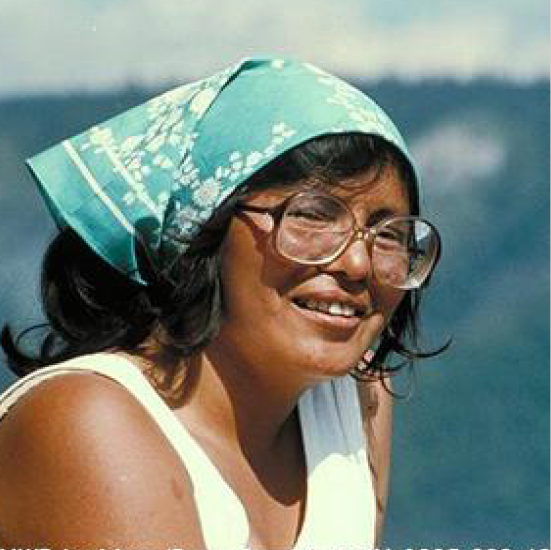
In the summer, when there was no school, I
would go to my parents' camp at Rabbitskin.
My mother would take me, and my brothers
and sisters, on the Mackenzie River, the
Dehcho. We would go by canoe up the
river, and set nets and go berry picking.
The kids were put in residential school.
We were educated, but we didn't learn
about hunting and trapping. We just spoke
English. We lost our language so we couldn't
communicate with our parents. So there
was a breakdown in communication. Parents
were grief-stricken, they lost their children.
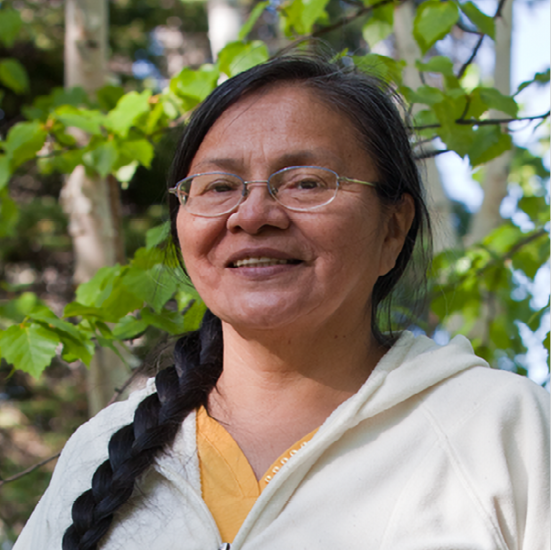
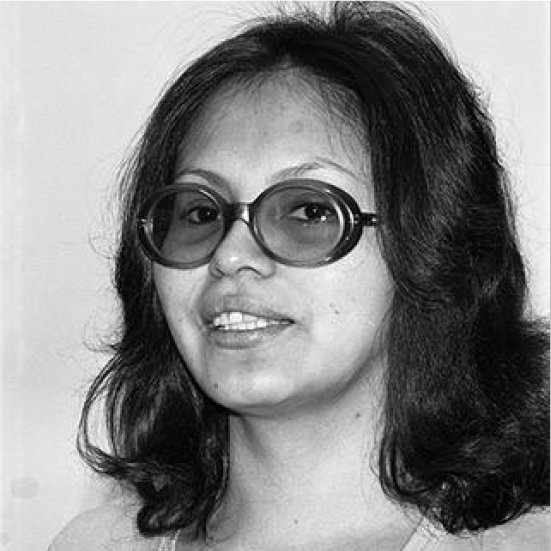
Photo: Linda MacCannell
Q: What did you do after college?
After college, I worked for the Dene Nation
and did the Land Use mapping for the
Dehcho region. The hunters and trappers
told us stories about where they were
raised, the cabins they used, where they
found game and fish.
In summer they travelled on the rivers and
sometimes they portaged. In winter they
used dog teams.
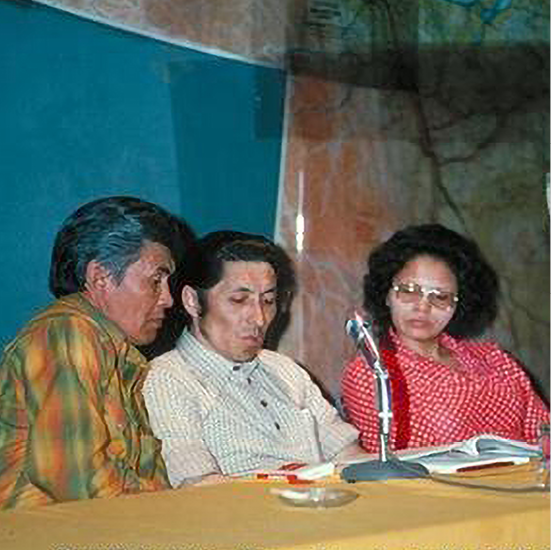
Photo: NWT Archives
Q: Did they make long journeys?
Some people travelled quite a distance.
William Antoine was raised across the river,
about 90 miles away. When they walked
back to town it took two days.
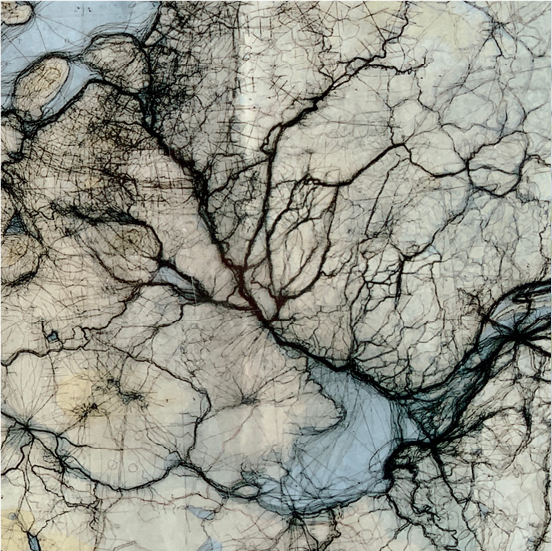
The Dene Nation used those Land Use maps
at the Berger Inquiry, to verify how vastly
the land was used by the Dene. When we
went to Yellowknife we put the maps on the
wall. Once you put them all together it was
like a huge net.
Photo: NWT Archives
Q: What was the importance of the Land
Use maps?
The Land Use mapping was worthwhile
because it gave some breathing room to
the Dene. More people in the communities
could get on board for a land claims
settlement.
The maps were a bridge from the older
generation to my generation. We were a
conduit for the knowledge of the elders.
Photo: NWT Archives
Q: Did you attend the Dene Assembly in
Fort Simpson?
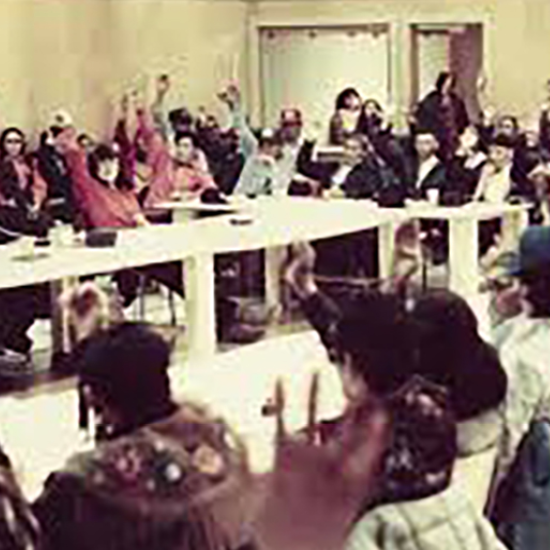
In the summer of 1975, a joint meeting
of the Dene and Metis was held in Fort
Simpson. The hall was full of people, chiefs
and their councils, leaders, young people and
the Elders.
It was right around the time that people
were starting to voice their opinions, taking
a stand, so I thought it was really significant.
For a young person, it was exhilarating.
Photo: NWT Archives
They voted on the Dene Declaration. With
everybody raising their hands, I thought it
was a major move. You could feel the surge
of power.
That night they held a drum dance. The hall
was packed with people celebrating that
Declaration. Over the years the drums had
been taken away, they were thrown in a
fire and burned.
There was nothing till this whole movement
started again. We were taking a stand, we
were all united, agreeing.
Photo: NWT Archives