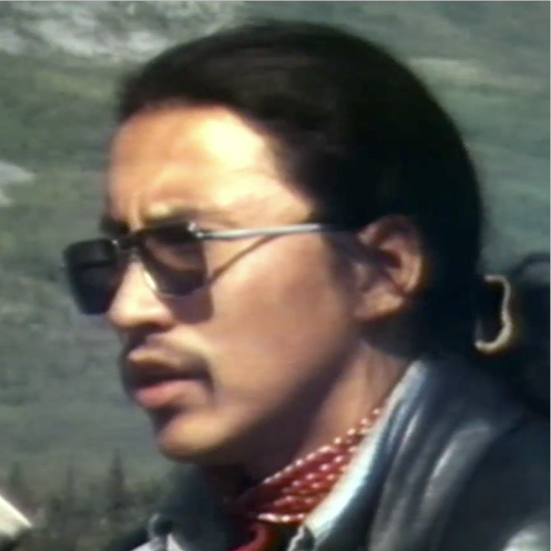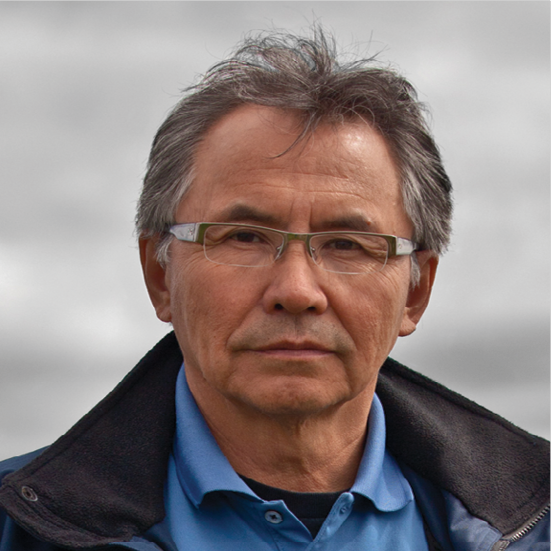
Q. What impact did university have on you?
I took the course on contemporary politics
and I used to argue with a professor. He
was a book-learn type guy. I used to do
papers and he marked me low because he
said, "You know how university works? You
got to read other people's stuff and then
build your paper on that.
But the stuff I was writing was from my
experience. No citation. Learning from our
Elders. But it's not written in any place.
Photo: Linda MacCannell
I came back from school in 1972. The
highway was being built and Simpson
was the hub. Along with that was the
proposed Mackenzie Valley pipeline. A lot
of speculators had moved in, getting
themselves ready to take advantage of the
construction of the pipeline.
The First Nations were by-passed, we were
on the sidelines. We were not consulted
about the development and we were not
considered to take on any jobs. There was
racism. We faced it every day.
Photo: NWT Archives
Q. What was your main challenge?
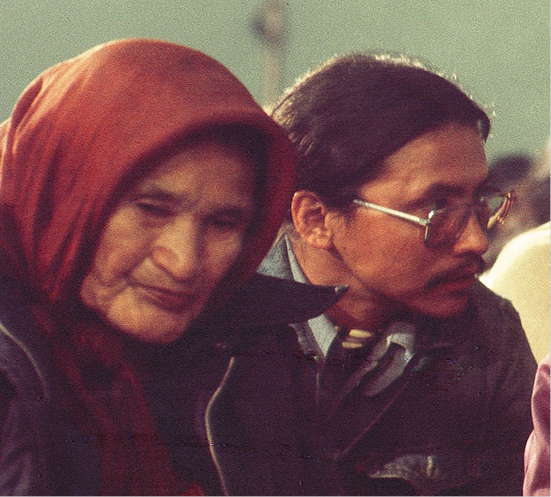
We were trying to start our land claims
process, to finalize our treaty. Our Elders
told us that in the treaty we signed in 1921,
we never gave up our land, the power and
the authority over our land: Philip and Mary
Margaret Moses, Julian Yendo.
Our position here in Fort Simpson was: this
is our land, we've never given it up. We
need to settle with the federal government
before any development can happen.
Photo: Michael Jackson
Q. Why was the Dene Declaration
important?
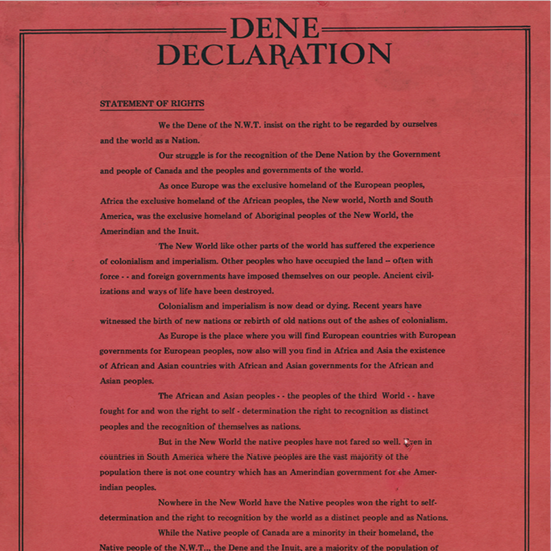
We said: We can't just lie back and let
things roll over us. We have to take a stand.
And we did. Self-determination. We want to
determine for ourselves how we fit into
Canadian society today.
The Declaration was the language that our
Elders had been using, but it was down on
paper for the first time. The ideas were
not new for us, but they were new for
the federal and territorial governments.
Q. What was the reaction of governments?
We felt a lot of animosity from Ottawa.
Judd Buchanan, the Minister of Indian
Affairs, said the Dene Declaration was
'gobbledegook'. Pierre Trudeau was saying
that there's no such thing as Aboriginal
rights, as self-determination.
But we weren't there for them, we were
there for our people. We had to let the
rest of Canada know who we are. And as
we started talking about it, we realized that
we're not in this alone. Other First Nations
in Canada feel the same way.
Photo: NWT Archive
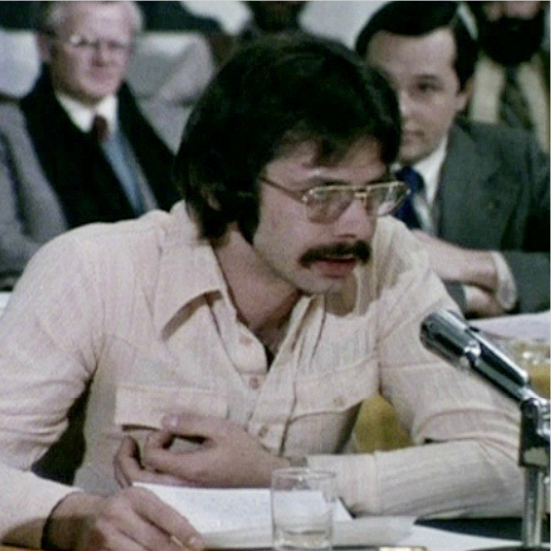
Q. What did say to Judge Berger?
I was pretty young, only 25 years old,
but the Elders asked me to to be chief
because of my education and because I
understood our language and our culture.
Our position here in Fort Simpson was: this
is our land, we've never given it up. We
need to settle with the federal government
before any development can happen.
Photo: Michael Jackson